

Affiliate disclosure: This review contains an affiliate link. We may earn a commission if you purchase through it, at no extra cost to you.
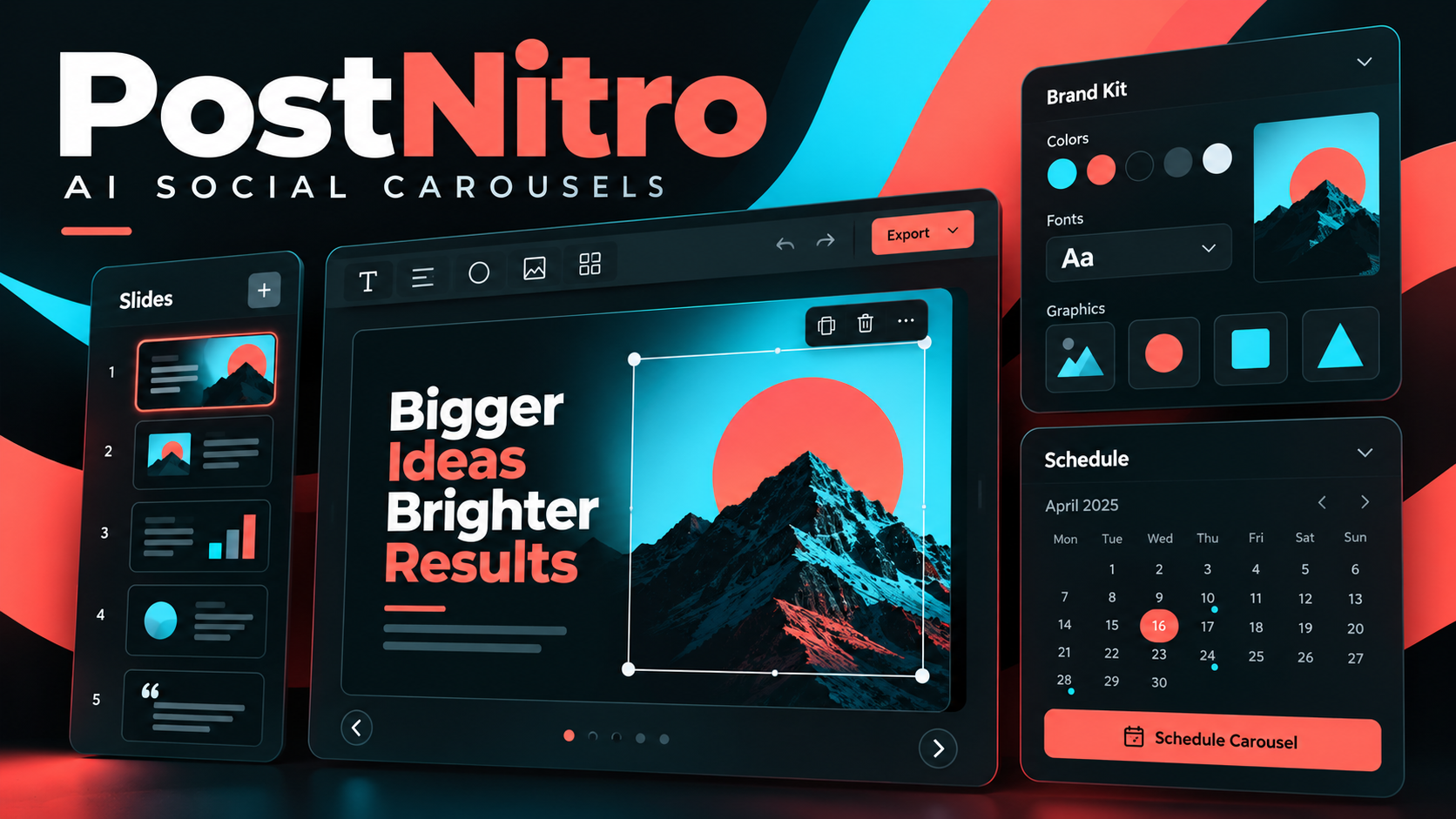
PostNitro is a AI social-carousel, design and publishing platform. This buyer guide explains the intended workflow, pricing points, strengths and limitations that matter before you commit.
Explore PostNitro and current plans →
What is PostNitro?
PostNitro is designed for AI social-carousel, design and publishing platform. Its value should be measured by how well it helps with a repeated task, rather than by a long AI feature list. The product works best when the input, desired outcome and review step are clearly defined.
Who is PostNitro for?
The clearest fit is social marketers, agencies and creators who publish branded carousel content. If that is not your workflow, begin with a free option or a small test instead of assuming a broad AI platform will solve a different problem.
How to evaluate the workflow
Use one genuine but non-sensitive project. Start with the original input, create a draft or output, revise it and export it in the format you actually need. This reveals whether the tool saves effort after—not just before—the first result.
Features worth checking
Check input formats, editing controls, exports, collaboration, integrations, brand settings and usage caps. The best plan is one that covers normal work and revision cycles without forcing an upgrade every time you need to iterate.
Pricing and value
The official plans list Free, Starter at $15/month, Creator at $20/month and Team at $50/month, with different downloads, templates and team limits. Prices and limits may change, so confirm the current checkout terms. Compare the plan with your expected monthly workload and not only with an attractive headline feature.
Strengths
A specialized tool can remove repetitive setup and produce a useful first version quickly. The benefit is strongest when it fits an existing process and a person can review or improve the result efficiently.
Limitations and responsible use
AI output can be incomplete or inaccurate. Review work before publication, protect client and personal data, and follow any academic, professional or platform rules. Do not use AI to impersonate people, fabricate sources, misrepresent authorship or evade accountability.
Buyer checklist
Confirm how credits, minutes, exports, seats or generations are counted. Test output quality, revision speed, privacy controls and cancellation terms. Keep original files and make sure you can export completed work without losing access to it.
Final verdict
PostNitro is worth considering for social marketers, agencies and creators who publish branded carousel content. Try it on a small real task first; a subscription is justified when the finished output, time saved and ongoing cost all fit your workflow.
Practical testing framework
Run a limited pilot before scaling. Record the time needed to produce a usable result, including edits and quality checks. Repeat with a second project that has different requirements. A product that appears fast in a demo may have a learning curve, credit costs or export limitations that change its real value.
Also consider where the work moves next. Teams may need shared assets, approval steps, brand consistency, integrations or a reliable archive. Individuals may care more about simple controls and predictable cost. The right tool is the one that improves the actual handoff in your process.
Frequently asked questions
Is PostNitro suitable for beginners?
Yes, when you start with one defined task and learn the core controls first. Read the plan limits before moving to a higher-volume workflow.
Should I buy the largest plan?
No. Start at the smallest plan that supports a realistic test. Upgrade only once your usage and output quality justify it.
Check PostNitro availability and pricing →
How to make a confident buying decision
A strong buying decision starts with a small controlled test. Use a project that resembles your normal work, write down the result you need, and include revision time in your evaluation. Look at the final output in its destination format, not only inside an attractive product interface. This creates a fair comparison against the tools and process you already use.
Measure quality as well as speed. Ask whether the result is accurate, on-brand, accessible and easy to correct. If a workflow creates additional cleanup, review or handoff work, the first draft may not represent real time saved. In contrast, a tool that reduces a repeated manual step while preserving human control can be valuable even if its initial setup takes time.
Costs, controls and workflow fit
Before paying, confirm exactly how the plan measures usage. Depending on the product, the limit may be credits, files, minutes, seats, generations, exports or projects. Estimate a normal month based on completed work, and leave capacity for experiments and revisions. Check what happens when a limit is reached, whether extra usage is available, and how you can cancel or downgrade.
Also examine the controls relevant to your work: exports, shared access, templates, privacy settings, integrations, brand assets and source-file retention. These details have more impact on long-term value than a long checklist of model names. The right tier is one that supports the end-to-end job without creating a new bottleneck.
Responsible use and review
Keep human judgment in the workflow. AI-generated text, visual material, research summaries and automation can be wrong, incomplete or inconsistent. Review claims and outputs before publishing, preserve the original source material, and follow rules set by your client, school, employer or platform. Do not use an AI tool to misrepresent identity, create false evidence, hide authorship or avoid genuine learning and accountability.
Bottom line
Choose a product only after a focused trial demonstrates that it improves a real task. If it saves time, maintains quality, fits your stack and has a predictable price, it may be worth the subscription. If it does not, the better option may be a simpler tool or your existing process.
Next steps after the trial
After completing a test project, review the result with the person who will actually use it. Note which settings, inputs and review steps produced the best outcome, then document a simple repeatable workflow. This turns an experiment into a process instead of a one-off AI result. Revisit plan limits after a month of genuine use, because the correct subscription tier becomes clearer once you know the real volume and revision pattern.
Finally, keep ownership of your work. Download the finished files where appropriate, maintain backups and review account settings before sharing materials with collaborators. These habits reduce switching costs and help ensure that an AI tool remains a useful part of your process rather than a dependency you cannot easily manage.