

Affiliate disclosure: This article contains affiliate links. If you buy through one of these links, AI Reviews may earn a commission at no extra cost to you. This does not affect our editorial assessment.
Robofy AI lead generation: what it is for
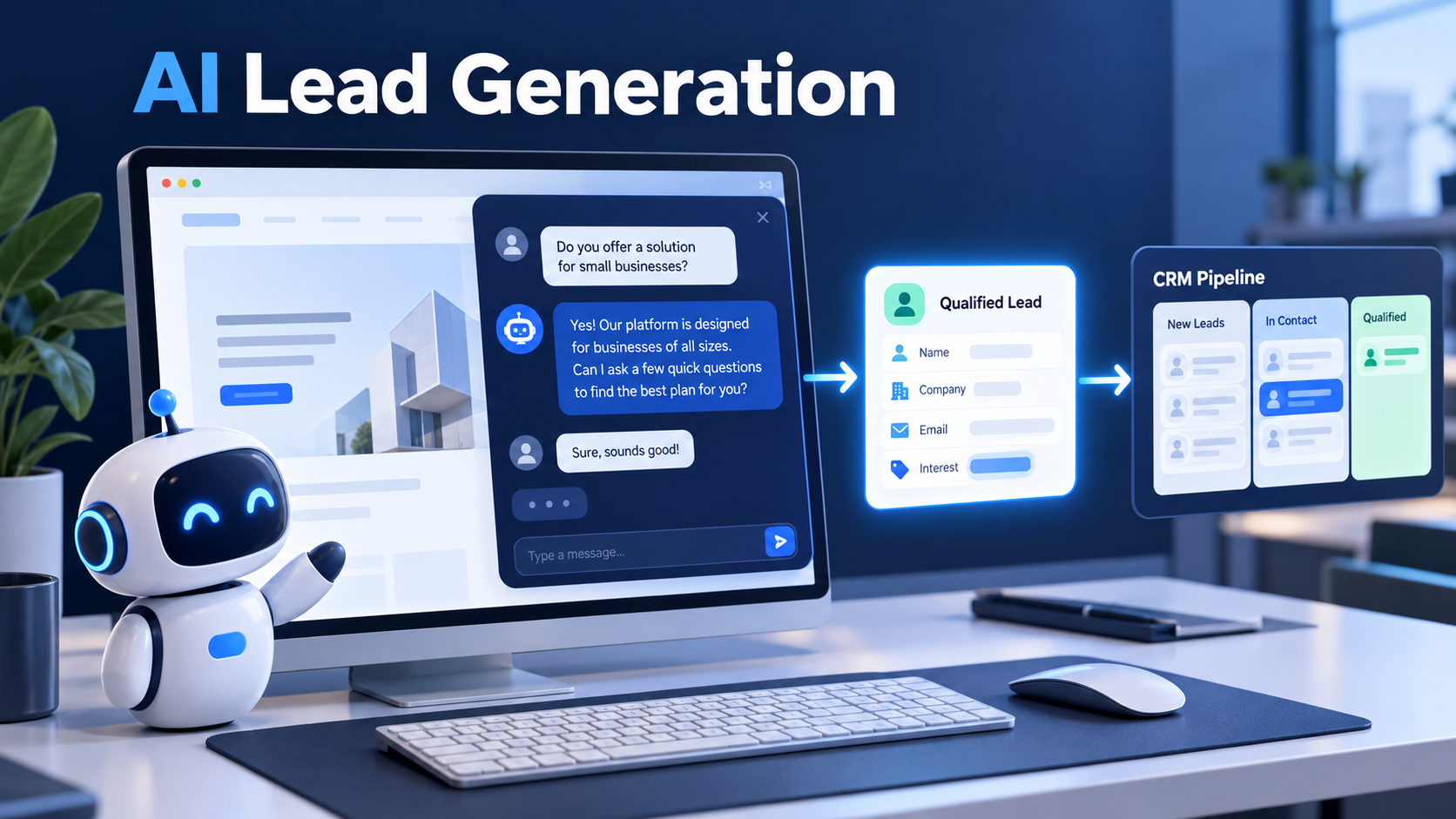
Robofy AI is most useful for lead generation when it is treated as a conversion workflow rather than a chat bubble. The platform positions its AI agents to work on a website and WhatsApp, answer questions from business material, qualify enquiries, capture the details your team actually needs, and route a conversation with context. That is a more concrete job than simply asking every visitor for an email address.
The practical opportunity is straightforward. A prospective buyer arrives outside office hours, sees an offer that looks relevant, and has a question before they will book, request a quote, or call. A well-configured AI agent can answer the approved first question, ask two or three relevant qualification questions, and send a concise handoff to the right person. A generic bot that asks for a phone number before helping is more likely to create friction than qualified demand.
Robofy’s official lead-generation material describes a lead-capture agent that qualifies in real time, scores against a business’s criteria, and delivers conversation context to the sales team. Its broader product and pricing pages also describe chat inboxes, APIs and webhooks, training from webpages and files, sentiment analysis, and channel coverage for website chat and WhatsApp. Those are capabilities to validate in your own account, not promises that remove the need for a sales process.
Build a lead workflow before you build a bot
Before choosing a plan, define the one conversion event that matters for your first pilot. It might be a booked consultation, a quote request with the correct service and location, a trial request, or a warm inbound call. Do not begin with a vague target such as “more engagement.” A useful lead workflow has a clear owner, qualification criteria, next system or inbox, response-time expectation, and a human fallback for questions the agent should not answer.
Start by writing the minimum viable intake. For a local service business, that may be service type, postcode or city, preferred timing, and a contact method. For B2B software, it might be company size range, use case, current process, and a meeting preference. Each question should change where the lead goes or what the team does next. If a field does not change a decision, do not collect it merely because it would be interesting.
Training quality is the first operational dependency. Feed the agent maintained pricing guidance, service descriptions, eligibility rules, FAQs, office hours, and a narrow set of approved comparison points. Remove outdated pages and contradictory documents. Ask it to acknowledge uncertainty rather than improvise an answer. The fastest way to lose a high-intent enquiry is for automation to give a confident but obsolete answer about price, availability, compliance, or scope.
Next, decide the conversation’s stop rules. A lead agent should hand off when the visitor asks for a binding price, a legal or medical answer, an account change, a complaint, an emergency, or a bespoke requirement beyond the approved information. Human handoff is not a failure state. It is the mechanism that makes automation safe enough to use at the top of the funnel.
Pricing, credits, and pilot economics
Robofy’s pricing page currently lists a Free tier with two AI agents and 4,500 one-time credits, then Starter at $19 per month with 60,000 monthly AI credits, Pro at $99 with 1,000,000, and Enterprise at $399 with 4,000,000. The same official page says text replies, voice activity, and training use credits; it cites approximately 60 credits per text AI message, while capacity varies by model and training resources. Treat current checkout terms as the source of truth because prices, allocations, and included integrations can change.
A small pilot should test both quality and economics. Run at least twenty realistic conversation scripts: direct buying questions, ambiguous requests, irrelevant questions, angry messages, incomplete information, and requests that require a human. Test on mobile as well as desktop. Then examine the conversation history to see whether the agent captured the right context and whether the sales team can act without asking the visitor to repeat themselves.
Measure a funnel, not just chat volume. Useful indicators include the proportion of conversations that receive an approved answer, the proportion that reach a qualified outcome, booked-meeting completion, lead-to-contact time, human-handoff rate, and downstream conversion. A large number of chats can be a warning sign when they reflect confusing navigation or poor answer quality. Compare outcomes with a baseline rather than relying on a dashboard number in isolation.
Integration design matters more than feature count. If you use a CRM, define what fields are sent, who owns duplicates, how source attribution is recorded, and what happens when the destination is unavailable. If a webhook is used, test a failed delivery and alert path. If a meeting tool is connected, set availability and cancellation rules. Robofy lists API and webhook capabilities on its plans, with Zapier shown for selected tiers; verify the exact plan and destination before promising a workflow internally.
Privacy, limits, and buying decision
Privacy should shape the script from the first prompt. Collect only information needed for the next step, explain why a contact detail is requested, and avoid asking visitors to paste payment, health, identity, or account secrets into chat. Keep consent language and retention practices aligned with your organization’s policy. An AI agent can accelerate a process, but it does not make an excessive data collection practice acceptable.
There are also real limits. An agent cannot repair an unclear offer, a slow sales follow-up, or a website that sends visitors conflicting messages. It can misunderstand shorthand, lack context from a browsing session, and struggle with requests that require judgment. Training sources need maintenance, and your team needs someone accountable for reviewing conversations and improving the workflow. Budget for that work alongside the subscription.
For most small teams, the buying decision is not “should we automate everything?” It is “is one repetitive, well-defined inquiry worth automating?” If the answer is yes, use the free tier or a small plan to test a single service, one landing page, and one routing destination. Expand only after the team can show that answers are accurate, leads are actionable, and handoffs do not create a poor customer experience.
Robofy may be a fit if you need customer-facing AI conversations across a website or WhatsApp, have clean source material, and can respond when the agent escalates. It may be a poor fit if your sales process is undocumented, every enquiry needs bespoke expert advice, or no one has time to maintain knowledge and follow up. The platform’s capability is only one input; operational readiness decides whether it produces value.
For a broader look at product features, current plans, limitations, and buying checks, read our Robofy AI review and buyer guide. Confirm the current plan limits and terms directly with Robofy before subscribing.
Decision checklist: Can we name one high-intent workflow? Are our answers current and approved? Do we know the minimum qualification fields? Is there a named human owner for escalations? Can our CRM or inbox receive the context reliably? Do we have consent-aware wording? Can we test before exposing it to all traffic? If any answer is no, fix that item before paying for a larger plan.
Robofy AI offers a credible framework for a lead-generation agent, but the purchase should follow a controlled pilot. Design the questions around a real sales decision, maintain the knowledge source, make human escalation easy, and track qualified outcomes. When those pieces are in place, automation can shorten the distance between a visitor’s first question and a useful next action.
Ready to compare the current plans and start a controlled test? Visit Robofy AI’s current plans.